Renewing our commitment to allyship one initiative at a time.
Being an ally is more than wearing an orange shirt— It is a lived commitment.
Read about our story and what Indigenous allyship means to us.
Guided by the Truth and Reconciliation Commission’s 94 Calls to Action
Advocacy
Calls to Action 3, 18, 20, and 22 inform our advocacy work towards healthcare equity including the implementation of Jordan’s Principle
Allyship
Calls to Action 43 and 44 inform our actions to promote, follow, and highlight United Nations Declaration on the Rights of
Indigenous Peoples
Reconciliation
Calls to Action 62 – 65 inform our actions to compile and promote free educational resources to teachers as true reconciliation begins with learning
Who We Are
- A grassroots non-profit group founded in 2021
- Predominantly non-Indigenous members based in and around the Greater Toronto Area

What We’re Fighting For
- To help relieve poverty in First Nations, Métis, and Inuit communities through collaborative initiatives that provide food and other necessities of life to individuals or families in need.
- To advocate for broader current issues in Indigenous allyship and justice through the use of social media platforms and community campaigns.

2. We receive funding through grants and occasionally crowdfunding campaigns. We keep none of the money we collect.
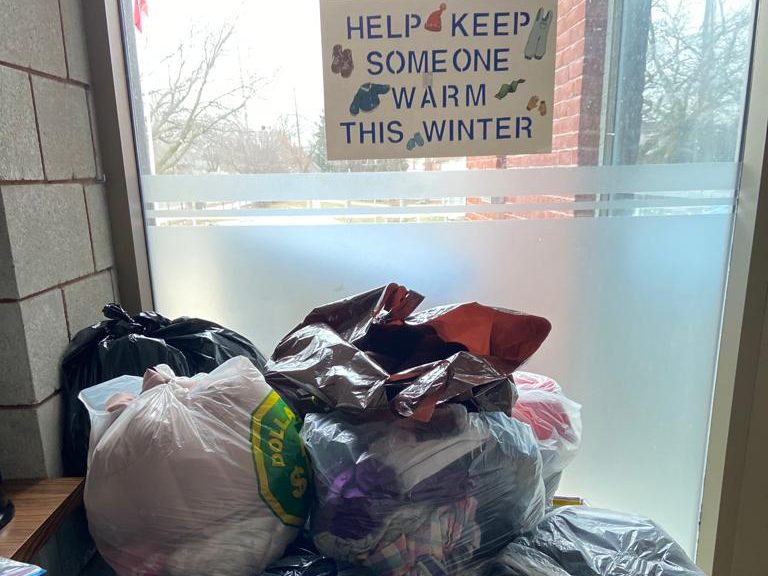
As of the close of 2024, we have shipped a total 9600 lbs worth of toiletries, food, and winter clothing over a total of 18 shipments!
“Thank you so much for your help and for sending our community members all of these goods. The baby items are going to fly off the shelf – those are a rarity here and so expensive.”
– Rachel Blais, Executive Director, Qajukturvik Community Food Centre
1. We maintain connections and communicate directly with the communities we collaborate with. Once we understand their needs and priorities, we come up with a plan to help them achieve their goals.

Our Projects
Since our founding in 2021, we have launched a variety of projects, short-term and ongoing. In all that we have done and will continue to do, our goal has always been to support and empower Indigenous communities across Turtle Island.
Online Advocacy Campaigns
We aim to raise awareness about topics affecting Indigenous peoples, bridge gaps in knowledge surrounding reconciliation, and encourage non-Indigenous people to practice mindful and appropriate advocacy.
Community Entrepreneurship
We aim to promote social connectivity, economic sovereignty, growth and stability for local Indigenous businesses, artists, and community organizations.
Food and Life-Necessities Security
We aim to relieve some of the intense food and life-necessities insecurity and poverty that persists in high-cost, remote Indigenous communities.
Youth Education and Schooling
We aim to bridge the gaps in education and cultural knowledge caused by colonialism that are contributing to systemic poverty in remote Indigenous communities.
We extend the upmost gratitude to the organizations we collaborate with who have allowed us the opportunity to make a difference.
Without them, none of what we do would be possible.



Miigwech, Niá:wen. Thank you for visiting our site.

